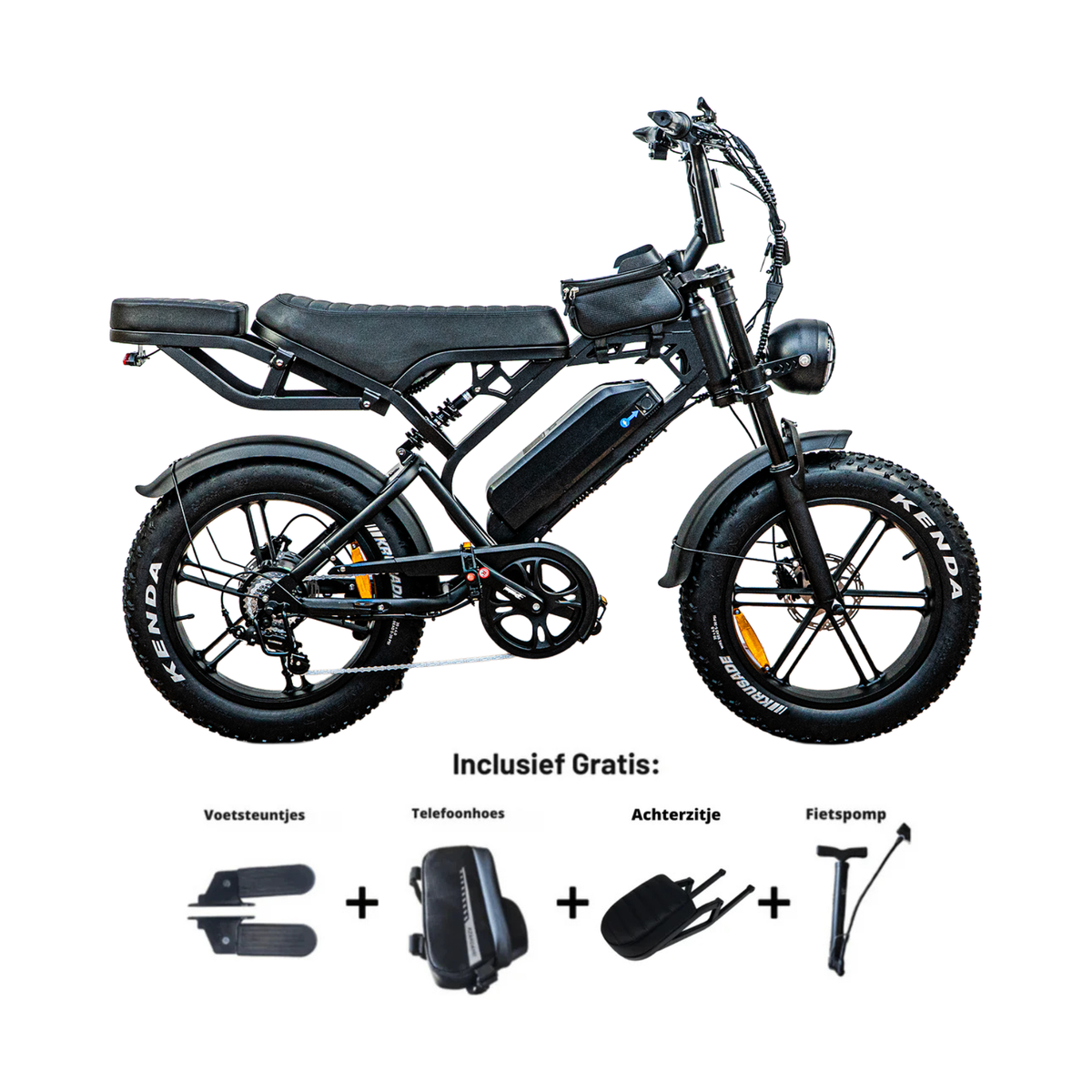


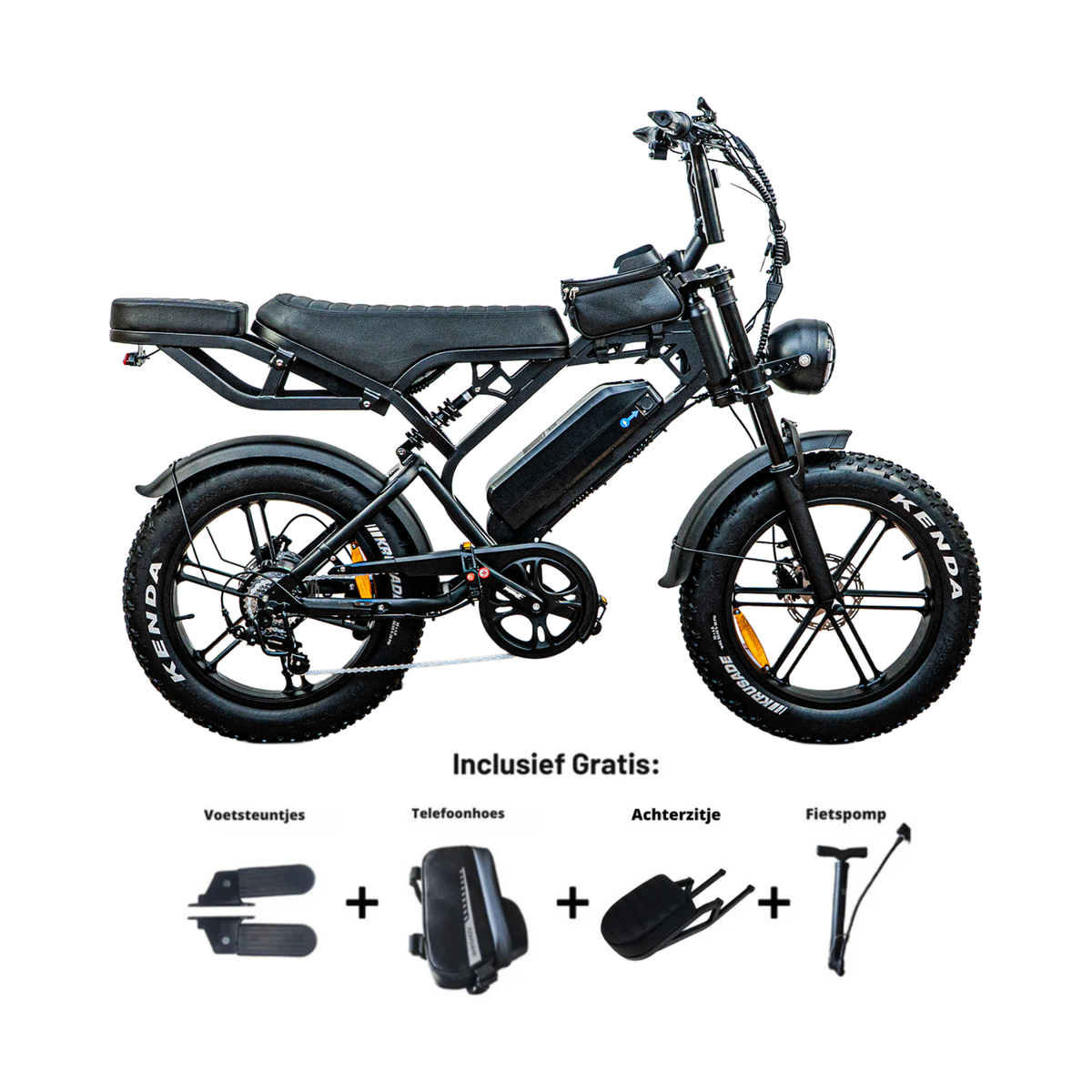
It's getting colder, it rains more often and it gets dark earlier. If you want to keep riding through autumn and winter, it pays to get your fat bike ready for winter. In this guide we'll walk through what to check together: the battery, the tyres and tyre pressure, the brakes, the chain, the lights and how to store your fat bike over winter. You'll find all the wear parts you need in our fat bike parts.
Fat bike battery in the cold: how to protect it
The battery is one of the most important parts of your fat bike, so that's where you start. The key rule: frost can damage the battery. So don't leave it out in freezing temperatures; take it inside after every ride and keep it somewhere frost-free.
Not riding for a while? Take the battery out of the bike and store it indoors in a dry place, charged to around 50% and at room temperature. Never leave it empty for a long time. Charge it at room temperature too, with the original charger, in a dry, well-ventilated place and while you're around. Never leave the battery charging unattended overnight. When you start riding again in spring, charge the battery first.
Just come in from the cold? Don't charge the battery straight away; let it warm up to room temperature first. Also expect less range in freezing weather than in summer.
Handy in winter: many models have a removable battery, so you can easily take it inside. A few examples from our range:
| Model | Battery | Charging time |
|---|---|---|
| Ouxi V8 Ultra | 48V / 15Ah / 720Wh, removable | 5-7 hours |
| Ouxi GT20 | 48V / 15Ah / 720Wh, removable | 4 hours |
| QMWheel V29 Pro Dual Battery | 2x 48V / 15Ah (720Wh), 1440Wh combined, removable | 5-7 hours |
| QMWheel V20 Cross | 48V / 22Ah / 1056Wh, removable | 6 hours |
A well-maintained fat bike battery usually lasts 500 to 1000 charge cycles, roughly 3 to 5 years (depending on use and storage). If your battery doesn't last as long after winter or has been damaged by frost, you'll find a replacement for each model in our fat bike batteries, from 298 euros. The compatibility table shows which battery fits your model.
Tyres and tyre pressure in winter
Tyre pressure drops in the cold, so check it more often than in summer. As a guideline:
- Paved roads: 1.5 to 2 bar
- Sand or soft ground: 0.5 to 1 bar
You'll find more information on our page about tyre pressure. Pump up your tyres with the Fat Bike Pump. Got a puncture or a worn tyre? Take a look at our fat bike tyres. We stock inner tubes in 16x4.0, 20x4.0 and 24x4.0, from 15 euros. Always choose the size printed on the sidewall of your tyre and check the valve type.
Checking your brakes: hydraulic or mechanical disc brakes
On wet roads you want to be sure your brakes work properly. All fat bikes in our range have disc brakes. The difference lies in how they're operated: hydraulic (with brake fluid) or mechanical (with a brake cable). Most models, such as the QMWheel V20 Pro and the Ouxi V8 Ultra, have hydraulic disc brakes. On the QMWheel V20 Cross, the Ouxi Q8 and the QMWheel V20 Pro Skinny Bike, the brakes aren't listed as hydraulic. Not sure what you have? Check whether a brake cable runs from your brake lever to the caliper; if so, you have mechanical disc brakes.
Above all, check your brake pads. On average you replace them every 1500 to 3000 km, depending on how you ride and the type of brakes. You can tell which pads you need from the brand name on your caliper or brake lever: Zoom or Logan. For both we have brake pads in Standard (from 15 euros) and Sintered Longlife (from 19 euros) versions. Squeaky brakes? Clean the brake disc with brake cleaner and check for dirt or grease. Hydraulic brakes may need bleeding; there's a bleed kit for hydraulic brakes for that (from 35 euros). If the whole hydraulic brake needs replacing, there are complete front and rear hydraulic brake sets, from 100 euros. For mechanical brakes there are separate calipers and brake levers.
Chain, rain and cleaning
Most models are splash-proof, so riding in the rain is fine; check your manual for the exact IP rating. Do avoid deep puddles. Clean your bike with a damp cloth and mild soap. Never use a pressure washer, especially not on the electronics.
In autumn and winter, lube your chain a bit more often, and give it a quick lube after a wet ride. Clean the chain with a cloth first, apply chain oil to every link and wipe off the excess. If the chain is stretched or rusty, you'll find a new one among our chains. With mudguards, you and your fat bike also stay a lot drier and cleaner.
Lights and visibility in the dark
Now that it gets dark earlier, your lights need to work. Good fat bike lights make sure you're seen in the rain and the dark. If your headlight or rear light has stopped working, choose a light that fits your model: for the Ouxi V8, C80, H9 and Q8 there's the Ouxi headlight, for the QMWheel V20, V20 Pro, S20 and V30 the V20 headlight. Each light lists which models it fits. See everything in fat bike lights.
Storing your fat bike over winter
Riding little or not at all in winter? Store your fat bike in a dry, frost-free place. Take out the battery and keep it at around 50% charge at room temperature. Secure your fat bike in storage with a sturdy lock; at least an ART-2 approved lock is recommended. If your battery lock is broken, there's a separate Fat Bike Battery Lock, from 25 euros.
Checklist: getting your fat bike ready for winter
- Take the battery inside after every ride and keep it frost-free.
- Battery just out of the cold? Let it reach room temperature first, then charge it.
- Not riding for a while? Battery out, charged to around 50%, at room temperature.
- Check tyre pressure more often: 1.5 to 2 bar on the road.
- Check the brake pads and replace them if needed.
- Lube the chain more often, and again after every wet ride.
- Clean with a damp cloth and mild soap, never with a pressure washer.
- Test your headlight and rear light.
- Check tyre pressure, brakes and chain every month, and get a full service at least once a year.
Frequently asked questions about winter maintenance
Can I leave my fat bike battery out in freezing temperatures?
No, frost can damage the battery. Always store it in a frost-free place. If it does get damaged, you'll find a replacement in our fat bike batteries.
Can I ride my fat bike in the rain?
Yes, most models are splash-proof; the exact IP rating is in your manual. Do avoid deep puddles, and give the chain a quick lube after a wet ride.
How often does my fat bike need servicing?
A full service at least once a year. On top of that, check the tyre pressure, brakes and chain every month.
Can I clean my fat bike with a pressure washer?
No, never use a pressure washer on the electronics. Clean your fat bike with a damp cloth and mild soap.
Our advice
Start with the battery and the tyre pressure: it takes little time and prevents the most expensive damage, a broken battery. Then check your brake pads, chain and lights. Unsure about your brakes, or is your bike due for a full service? Have it done professionally rather than tinkering yourself. Not sure which part fits your fat bike? Check the compatibility table or our help page. Shipping costs and delivery times per country are in our shipping policy.